Improve Public Speaking in English by Mastering Rhythm
Improve Public Speaking in English by Mastering Rhythm
November 13, 2025
Press play below to listen to the audio version of this post.
Public speaking doesn’t just happen on a stage in front of hundreds of people. If you’ve ever had to lead a meeting, speak up on a Zoom call, present an idea to your team, or explain something to a manager or client, you’ve done public speaking. And if you’re trying to improve public speaking in English – especially as a non‑native speaker – you’ve probably felt that strange disconnect between the English you know in your head and the English that comes out of your mouth.

Why Fluency Isn’t Enough to Be a Great Public Speaker
That feeling isn’t a sign that your English isn’t good enough. In fact, many C1/C2 English speakers still feel awkward, monotone, or overly careful when speaking publicly. And even for native English speakers who want to improve public speaking, the challenge isn’t the words.
It’s how those words are delivered. Rhythm, flow, and presence matter more than most people realize.
This post is the first in a 3‑part series designed to help international English speakers become more dynamic, expressive, and engaging presenters. We’ll cover the three skills that make the biggest difference when trying to improve public speaking in English:
Rhythm, Connection, and Vocal Presence
Today, we’re starting with rhythm, because it builds the foundation for improving public speaking in English.
Want the next two posts delivered straight to your inbox?
Subscribe to The English Explainer, my free weekly newsletter. Every Thursday, I share advanced English vocabulary, pronunciation tips, and an audio version so you can practice your American accent with me. My subscribers will be the first to know when the next posts are published.
You’ll also get instant access to my American Accent Mini Course, including a rhythm practice page.
Why Public Speaking Feels Harder in English
Maybe you are a confident speaker in your first language but feel unsure when speaking publicly in English. Or maybe you’ve never enjoyed public speaking in any language and want to improve because it feels like an essential professional skill.
Whichever group you’re in, one thing is almost always true:
You were never taught how English rhythm works.
Not in textbooks.
Not by teachers who told you to “just repeat after me.”
Not by Duolingo or any of the other language apps you’ve tried.
Simply mimicking what you hear rarely works. To improve your English speaking skills, you need to understand why English sounds the way it does and what patterns native speakers rely on without even noticing.
That’s where rhythm comes in.

Understanding Rhythm: The Foundation of Natural Public Speaking
If you’ve ever felt monotone or robotic when speaking English, learning rhythm is a powerful place to start. Improving your sense of rhythm is one of the fastest ways to improve public speaking because it affects clarity, expressiveness, and engagement all at once.
I’m going to break rhythm down into word-level rhythm and sentence-level rhythm, no musical experience necessary!
Word-Level Rhythm
Every English word can be broken down into one or more syllables. In the case of one-syllable words, that single syllable is usually stressed, meaning that the vowel sound is a bit louder and longer than the sounds around it.
There are a number of one-syllable words that are not stressed, but we’ll come back to that in a second.
Two-syllable words have one stressed syllable and one unstressed syllable. Words with three or more syllables will have one syllable that receives the primary (biggest) stress, one syllable that receives the secondary (slightly smaller) stress, and then one or more unstressed syllables.
You might be wondering how the heck you’re supposed to know which syllables get which kind of stress. There are some general guidelines you can follow, such as the ones provided by Valencia College here. But overall, you really just have to learn as you build your vocabulary.
When you come across a new word, I highly recommend looking it up in a dictionary like Merriam-Webster and clicking the audio button for the pronunciation of that word. You can also pay attention to how they write the word phonetically.
Even if you don’t fully understand their symbols, watch for the little vertical lines at the top and bottom of the word.
- ˈ (apostrophe above) = primary stress
- ˌ (comma below) = secondary stress
- No mark = unstressed
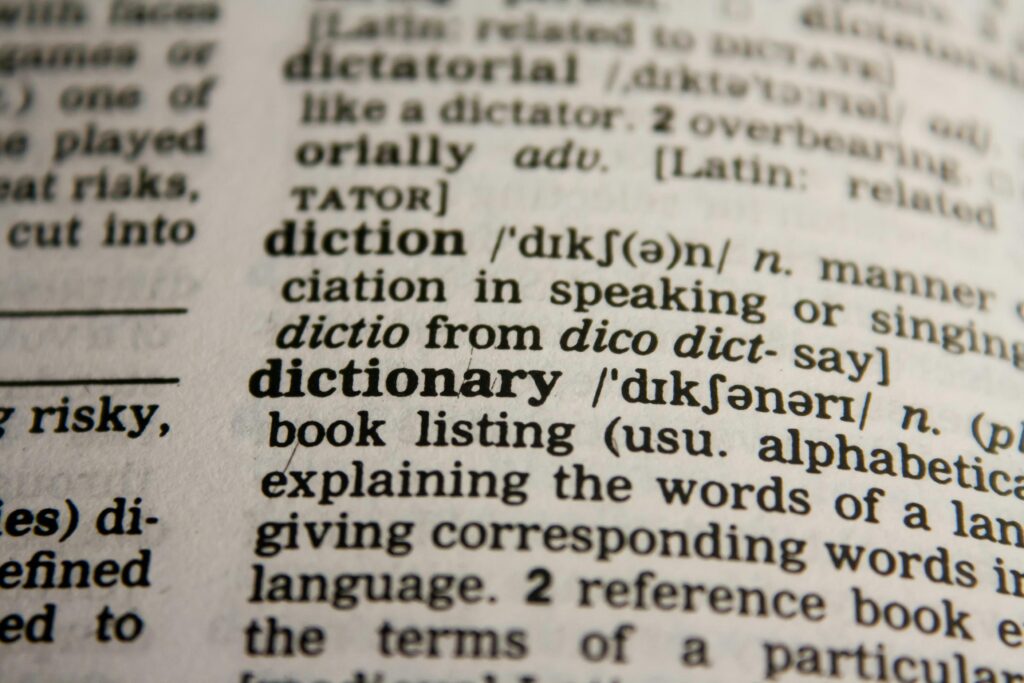
A line at the top that looks like an apostrophe means that the next syllable gets the primary stress. A line at the bottom that looks like a comma means that the following syllable gets the secondary stress. Any syllable without a little line is unstressed.
Here’s how they write the word “clarify”: ˈkler-ə-ˌfī
- ˈkler (clar) = primary stress
- ə (i) = unstressed
- ˌfī (fy) = secondary stress
Understanding word stress makes your speech clearer and more natural, and it absolutely helps improve public speaking in English.
Sentence-Level Rhythm: Alternating Slow and Fast
Here’s where rhythm starts to transform your delivery.
American English uses alternating patterns of slow and fast. We can think of the slow moments as “lingering” on words by making them slightly louder and longer. For the fast moments, we rush through words in one of three ways:
- Saying them quickly
- Removing sounds
- Modifying the vowel to make it easier to say quickly
In the normal flow of conversation or public speaking in English, we linger on content words, which are the words that give us interesting and necessary information, such as:
- Nouns (people, places, things)
- Verbs (action words)
- Adjectives (describe nouns)
- Adverbs (describe verbs or adjectives)
We rush through function words, which are the less-exciting, often quite short words that we need for correct grammar but that don’t really provide the most important information. Function words that we rush through include:
- Pronouns (I, you, we, they, our, my, your, his, etc.)
- Articles (the, a, an)
- Prepositions (and, but, or, for, yet, etc.)
Remember how I said some one-syllable words are not stressed?
The one-syllable words in those rush categories are not stressed unless you add stress for dramatic effect or to strengthen a specific meaning.
A Clear Example
Read the following sentence out loud and notice which words you naturally rush through:
“My sister wants to come with us.”
You likely rushed through: my, to, with, us.
But if you wanted to emphasize that it’s your sister, not someone else’s:
“My sister wants to come with us.”
Or if the important part is that she wants to come with us instead of another group:
“My sister wants to come with us.”
This is the beauty of American English rhythm: you can change the meaning just by changing which word you stress. Mastering this expressive flexibility is one of the most powerful ways to improve public speaking in English.
And even when you speak without added emphasis, using natural patterns of “lingering” and “rushing” will make your speech more dynamic and clearer. It helps hold people’s attention and makes it easier for them to understand you – even if you mispronounce a few sounds.
English speakers expect this rhythm. When you use it, they lock in.